Azargashnesab fire temple; A symbol of the glory and faith of ancient Iran
Views: 0
Before Islam, Iran was a very religious country, and religion, like today, was in the fabric of Iran. Most of the small and big villages and towns had a place of worship which was called fire temple. Fire is the sacred element of the Zoroastrian religion and even before the appearance of the Prophet Zoroaster among the Aryans, fire, which symbolizes the world of light, was considered holy and good.
Among the fire temples of ancient Iran, three fire temples were of special importance and sanctity. One was in the cradle of Zoroastrian religion, that is, in the region of Azerbaijan, where some Sassanid masters considered Zoroastrian to be a son of Azerbaijan. One was the fire temple of Azarbarzin Mehr in Khorasan and the other one was the fire temple of Azar Farnbagh in Fars province. Azarfarnabh fire temple was the fire temple of the clerics and religious class. The fire temple of Azarbarzin Mehr was the fire temple of the peasant class, and the fire temple of Azarghashnab was the fire temple of kings and knights. So it is clear that this fire temple, Azargashnasab fire temple, was the most important fire temple in ancient Iran.
Azargashansab's position among the three big fires
Azargushnasp, which is also recorded as "Azergashsp" and "Azershasp" in ancient texts, was a fire temple that was reserved for the class of warriors, soldiers and kings. This fire temple was not only a place of worship, but also the largest educational, religious, social and worship center of Iranians before the arrival of Islam in Iran. The extent of this religious, social and political complex was such that it turned it into the largest religious and administrative establishment of the late Sassanid period that has been identified so far.
Mythology and history: from the temple to the fire temple
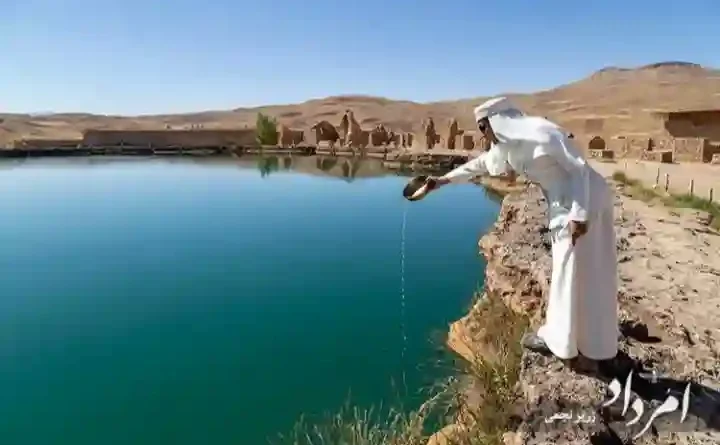
Azargashnesab fire temple is about 3000 years old and mythological traditions refer to interesting stories about this fire temple. According to these traditions, this fire temple, which is located by Chichest Lake, was originally an idol house, and in a war, King Kikhusro Kayani, who is one of the most famous people in Iranian mythology and according to many Shahnameh scholars, is the most famous king of the Shahnameh, defeated the pagans in a war, and fire, the sacred element of the idolaters of Iran at that time, lit up the building and made the idol house the place of the fire temple and worship of the idolaters of ancient Iran, which showed that The presence of Mazda worshipers is the first and primary in ancient Iran, and Mazda worshipers like Ki Khosrow went to war with pagans.
During the Sassanid era, this fire temple reached its peak of glory. Since the beginning of the Sassanid era, Azerbaijan was considered as a major military base due to its proximity to the Armenian Christians in the north and the Romans in the west, and due to the presence of the fire temple of Azargashensab in Takht Suleiman (ancient Shiz) as an important religious place for the Sassanids.
great discovery; The stamps that proved the identity
We are sure that this fire temple belongs to the fire temple of Azargashnesab, because a large number of gold seals have been found, and in one of these gold seals, the exact name of the fire of Azargashnesab is mentioned.
In the excavations of German and Swedish archaeologists in Takht Sulaiman, a large number of seals and seal impressions (prints made by seals on clay) have been discovered since the end of the Sasanian period. These gold seals, on which inscriptions in Pahlavi Sasanian script (Middle Persian language) are engraved, have helped a lot to clarify the administrative situation of that period, especially the names of the employees and dignitaries of this area and even their position and position, and have increased our knowledge of the collection of special names from that period.
*** On one of these precious flower seals, an inscription is engraved in Sasanian Pahlavi script, which translates as follows: "Mowbed i xanag i Ādur i Gušnasp". This phrase engraved on the flower in the middle Persian language clearly bears the name "Azerghshanseb" and confirms the high position of this fire temple as one of the three sacred and main fire temples of ancient Iran. The discovery of this same seal, on which the name of Azargashnesab is written, has proven this name for today's Takht Suleiman.
In addition, through the images and signs on these seals, you can understand the beliefs of the people at that time. Also, the clarification of the names of some mints, which are abbreviated on the coins of that era, is also due to this great discovery.
The architecture and splendor of a unique complex
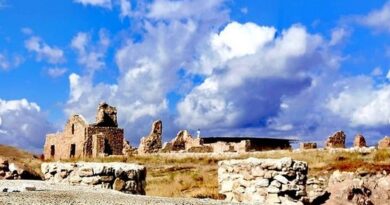
The remains of the historical complex of Azarghashnab Fire Temple are inside an oval fence with large gates from the Sassanid period and remains from the Islamic era. This ancient site is located 45 km northeast of Takab city and south of Lake Urmia and contains architectural remains from the Achaemenid and Sasanian periods.
Azargashnasab fire temple is mistakenly known as Takht Suleiman's building. In order to prevent the destruction of this work during the Arab invasion of Iran, this work was sanctified with stories of Prophet Solomon so that it would not be attacked and destroyed.
Finally, the fire temple in the storm of history
This great fire temple, which was the religious and military center of the Sassanid Empire for centuries, was finally destroyed in 624 AD during the attack of Heraclius, the Roman emperor, on Iran. Later, Abaqa Khan, the nephew of Helako Khan, built a mosque on the ruins of this fire temple, which was also destroyed later, and only tiles with embossed lines remained, which are kept in the Reza Abbasi Museum today.
Today, Takht Suleiman complex has been registered as one of the most important historical works of Iran in the UNESCO World Heritage List and is a reminder of the greatness of ancient Iran and the deep-rooted faith of our ancestors.
In this year, i.e. 1405, some pieces of plaster were found in an ancient place in Khorasan, which does not give the possibility of discovering the face of the great Sassanid emperor Yazdgerd. The importance of this discovery is that it does not strengthen this hypothesis, it clarifies the exact location of Azarbarzin Mehr fire temple in Khorasan. But according to the gold seals of Azargashnesb fire temple, we are sure that the fire temple was exactly Azargashnesb fire temple.
The oldest Zoroastrian text found